EPY / EPYS vs. NISSEI ASB & AOKI
One-Step ISBM Machine Comparison
A clear, specification-level comparison between our One-Step Injection Stretch Blow Molding machines and leading Japanese brands, so you can make an informed procurement decision with confidence.
Browse All ISBM ModelsDirect Replacement Options for Japanese ISBM Equipment
Many manufacturers around the world currently operate NISSEI ASB or AOKI One-Step ISBM machines. When it comes to expansion, replacement, or capacity upgrade, sourcing a like-for-like alternative at a competitive price point is a priority. Our EPY and EPYS series machines are engineered to match the capacity class, station configuration, and output characteristics of these established Japanese platforms, enabling a seamless transition with no compromise on container quality.
The cross-reference data below is structured around real machine capacity classes, not marketing claims. Each model pairing reflects matched injection volume, clamping force range, and typical container application so your engineering team can evaluate like-for-like.
EPY / EPYS vs. NISSEI ASB — Japanese One-Step ISBM
NISSEI ASB machines have long been a global reference standard for small-to-large volume one-step bottle production. The following EPY and EPYS models are positioned as direct capacity-class alternatives, covering compact cosmetics packaging through to large-format container production.
| Our Model (EPY / EPYS) | Configuration | Comparable NISSEI ASB Model | Application Notes |
|---|---|---|---|
| EPYEPY150-V4-2 | Standard Configuration | NISSEIASB-12M | Small-capacity 4-station; cosmetics and pharmaceutical vials, 5–150ml |
| EPYSEPYS150-V4-EV | Full Servo Drive | NISSEIASB-12M | Same capacity class as ASB-12M; full servo provides energy saving and precision positioning |
| EPYEPY250-V4 | Standard Configuration | NISSEIASB-70DPH | Mid-range capacity; wide-neck jars, personal care and food containers, 50–500ml |
| EPYEPY250-V4-B | B-Series (Extended Platen) | NISSEIASB-70DPW | Wide-platen B variant; accommodates larger mold footprints and wide-mouth containers |
| EPYEPY650-V4 | Large-Capacity Model | NISSEIASB-650 | High-output large-format production; 5L to 20L containers, industrial and household products |
EPY / EPYS vs. AOKI — Japanese One-Step ISBM
AOKI machines are widely used across Asian and European production facilities for mid-volume cosmetics, food, and beverage container manufacturing. Our EPY and EPYS series covers the equivalent capacity bands of the SBIII and AL series with both standard and full-servo drivetrain options.
| Our Model (EPY / EPYS) | Configuration | Comparable AOKI Model | Application Notes |
|---|---|---|---|
| EPYEPY150-V4-B | B-Series | AOKISBIII-100L-20 | Compact entry-level; small containers and vials, 5–100ml, cosmetic closures |
| EPYEPY150-V3-B | 3-Station Model | AOKISBIII-100L-20 | 3-station configuration; suitable for simple mold geometries and lower-output lines |
| EPYEPY200-V4-B | B-Series | AOKISBIII-250LL-50S | Mid-range food and personal care containers; 50–250ml, wide-neck capability |
| EPYEPY200-V3 | 3-Station Model | AOKISBIII-250LL-50S | 3-station alternative in the 250 capacity class; shorter cycle path, simpler maintenance |
| EPYSEPYS350-V4-EV | Full Servo Drive | AOKIAL-350LL-40 | Precision full-servo model; higher-volume output, pharmaceutical and premium personal care packaging |
How EPY / EPYS Compares: Key Feature Differences
Beyond raw model pairings, the following table outlines the key technical and commercial differences between our EPY / EPYS platform and the Japanese NISSEI ASB and AOKI equivalents, helping you evaluate the total value proposition.
Why Manufacturers Choose EPY / EPYS Over Japanese Alternatives
Our machines are built to match the output quality of NISSEI ASB and AOKI at a significantly lower total cost of ownership, while offering faster after-sales support and greater configuration flexibility.
Full Servo EV Edition
The EPYS-EV models incorporate full servo drive systems for precise injection, stretching, and clamping control. This delivers energy savings of 20–35% versus hydraulic equivalents and reduces cycle variation to sub-millisecond levels.
Lower Total Cost of Ownership
Compared to imported Japanese machines, EPY / EPYS units carry a significantly lower acquisition cost, with domestic-proximity spare parts availability reducing unplanned downtime costs and eliminating long import lead times.
Flexible Configuration Range
From the compact EPY150 to the large-format EPY650, and from 3-station to 4-station layouts, the EPY / EPYS range covers a wider configuration envelope than most competing platforms, without requiring custom engineering.
Global Technical Support
Our technical team provides remote diagnostics, video-guided commissioning, and on-site engineer dispatch across major markets, reducing the support gap that previously existed for non-Japanese buyers of Japanese equipment.
Proven Production Base
Our machines are produced in a dedicated ISBM manufacturing facility with full quality inspection protocols, test-run verification before shipment, and documentary compliance for CE and international market entry requirements.
Application Development Support
New container geometries, wide-neck applications, and specialty resins can be validated with our R&D team prior to machine order, reducing risk on new product launches that would otherwise require expensive tooling trials.
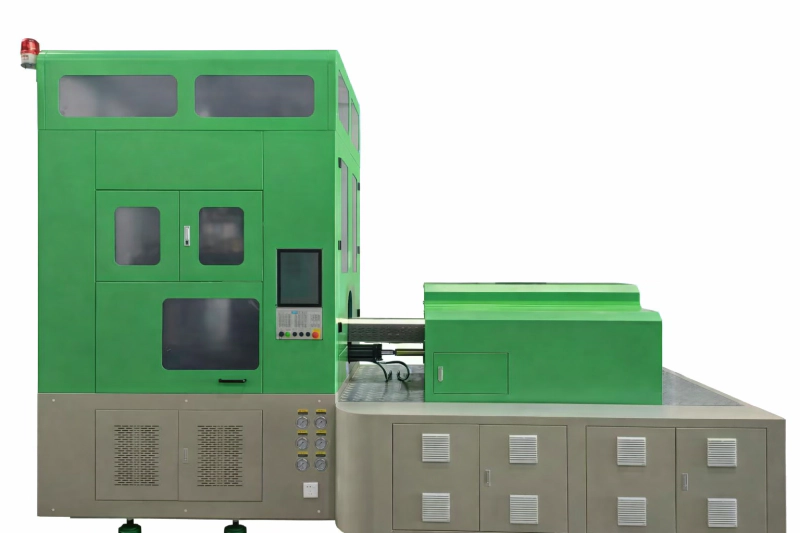
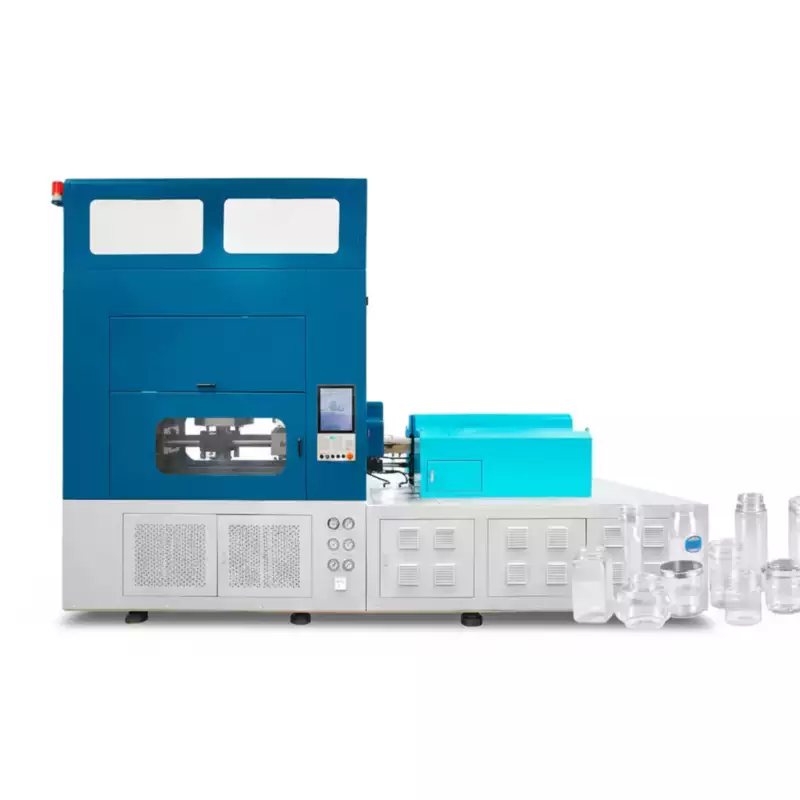
EPY / EPYS Model Lineup
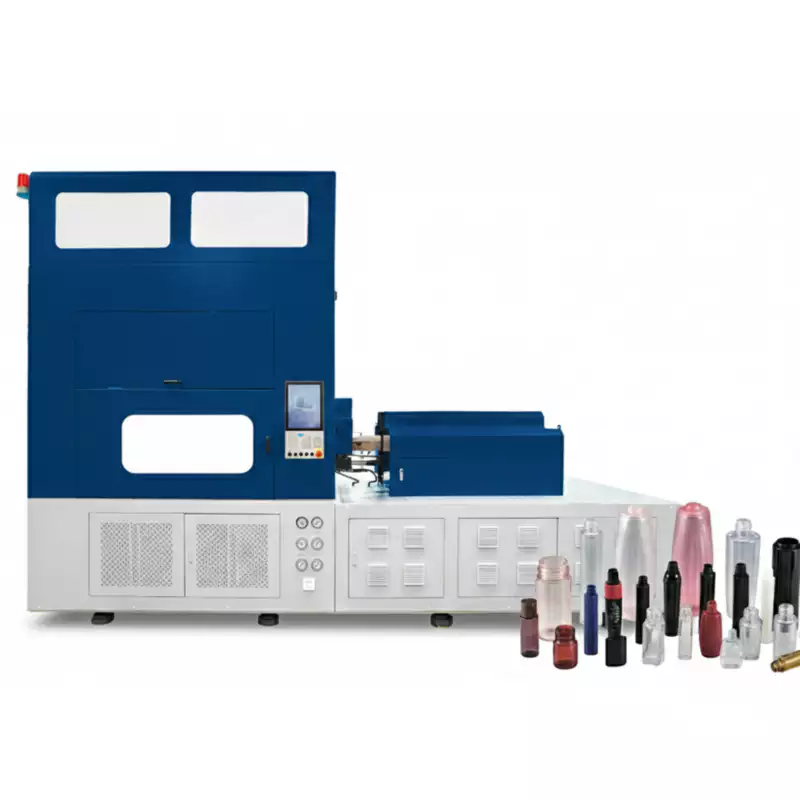
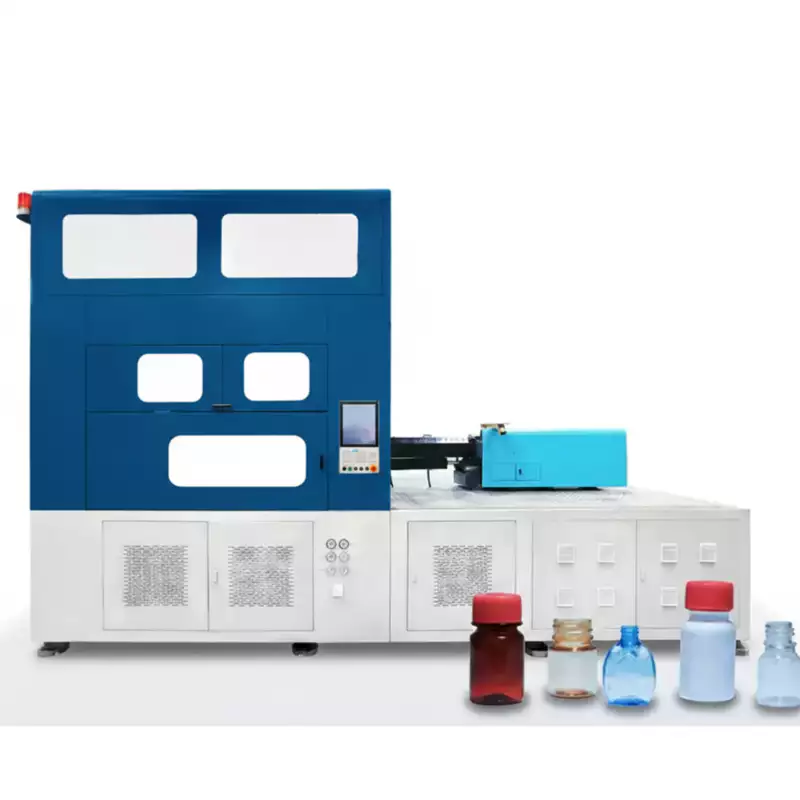
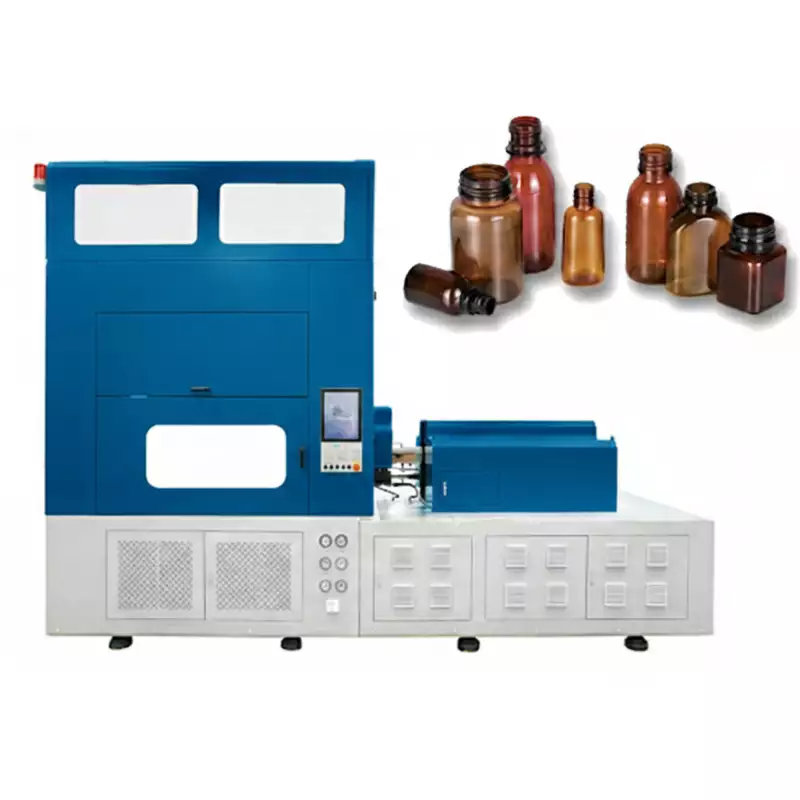
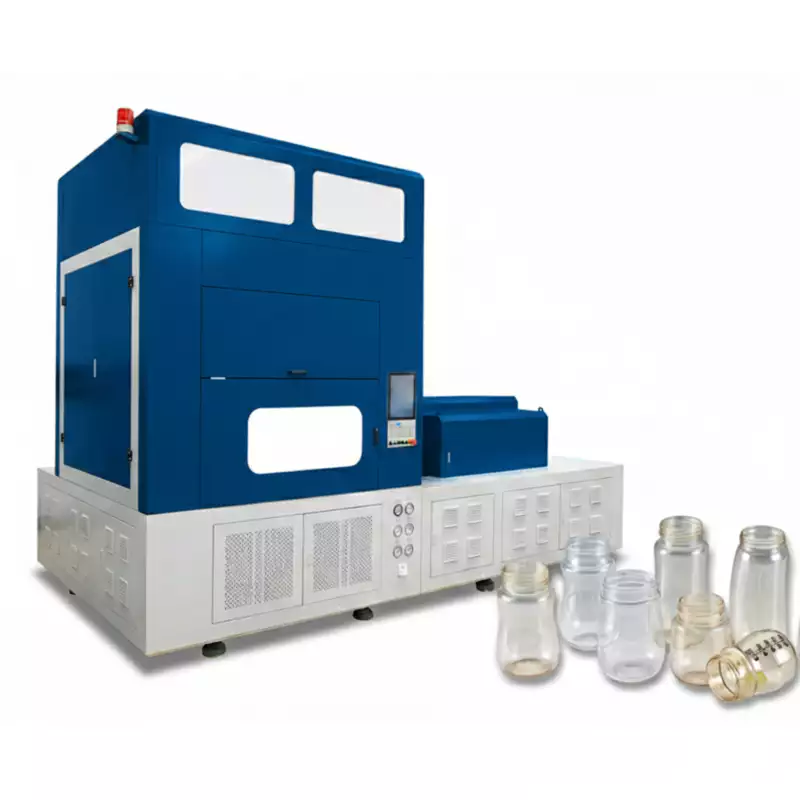
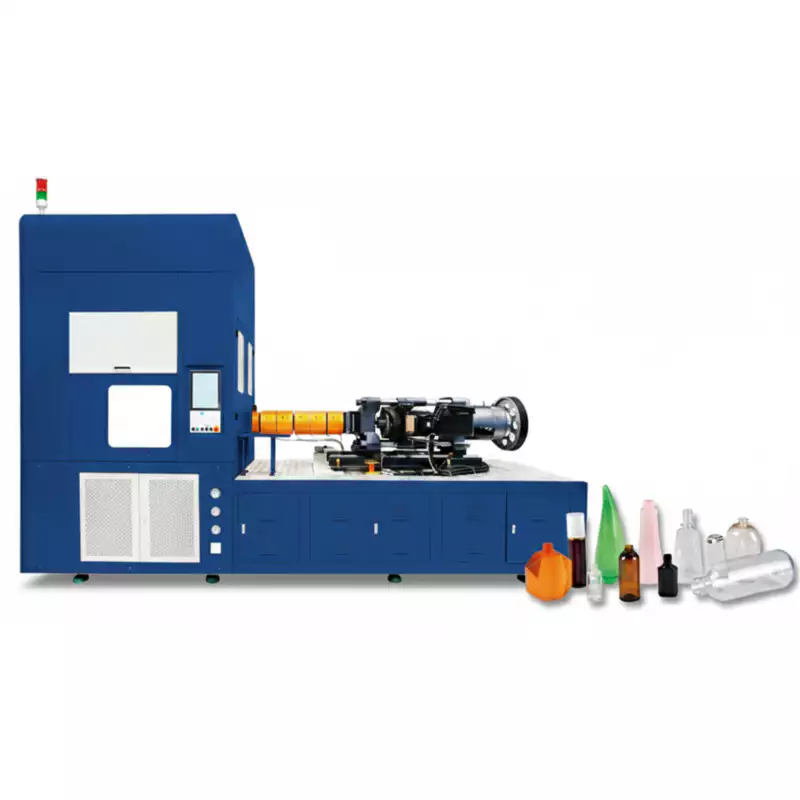
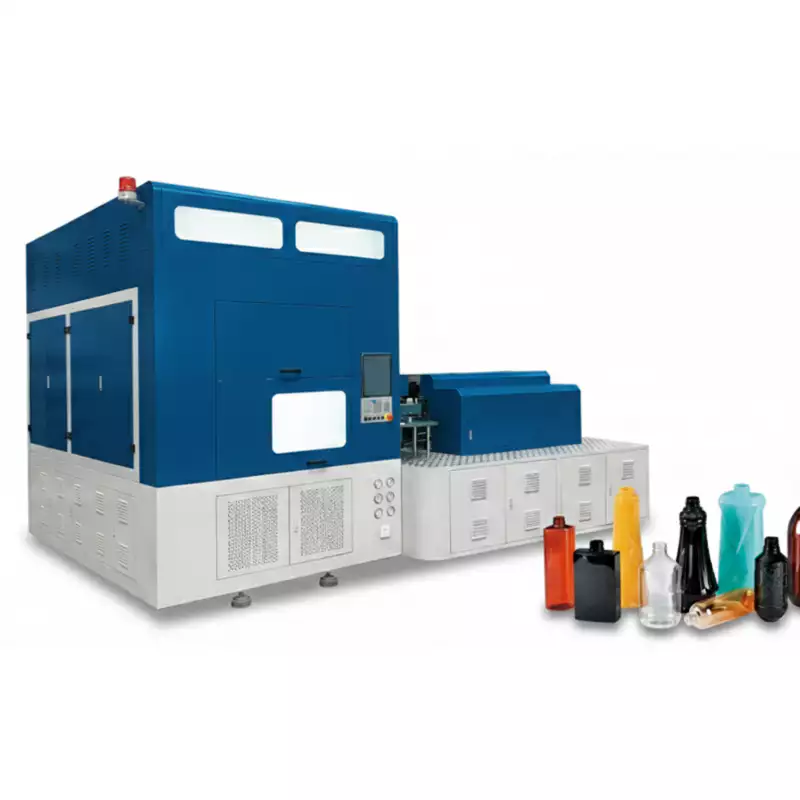
The EPY and EPYS series spans multiple capacity classes and configurations. Below is a visual reference to the key models available in the lineup, each corresponding to one or more capacity-class equivalents from the NISSEI ASB and AOKI range.
Container Quality That Meets the Same Standards as Japanese-Made Output
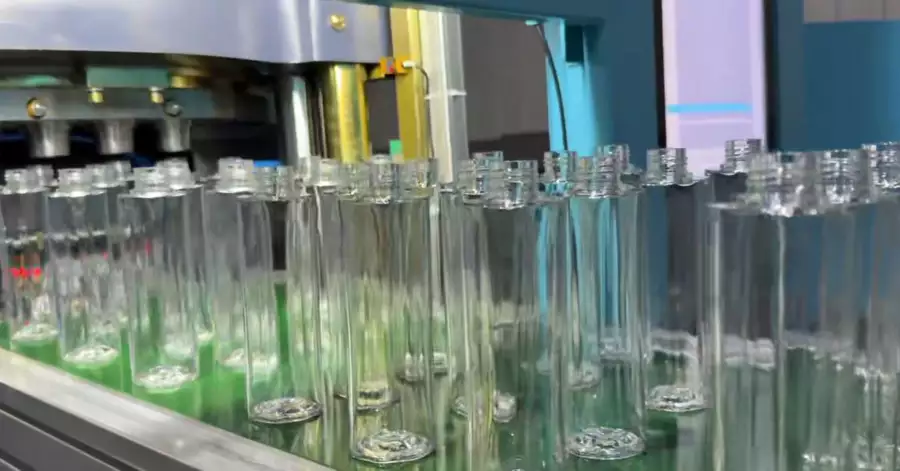
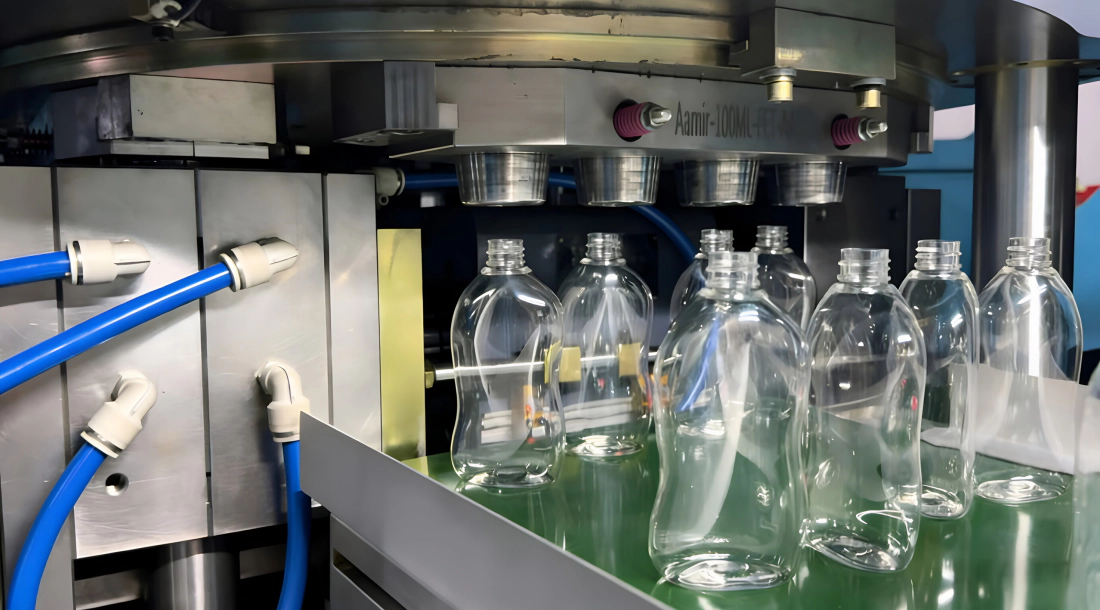
One-step ISBM produces containers directly from resin pellets in a single machine cycle, eliminating the two-step preform reheating process and delivering superior wall uniformity, clarity, and base strength. Our EPY and EPYS machines process PET, PP, and HDPE across cosmetics, personal care, pharmaceutical, food, and specialty chemical packaging formats.
The finished containers shown here were produced on our machines in active customer production environments, demonstrating the surface clarity, neck-finish accuracy, and dimensional consistency that our clients require when transitioning from Japanese equipment.
Learn About Our Manufacturing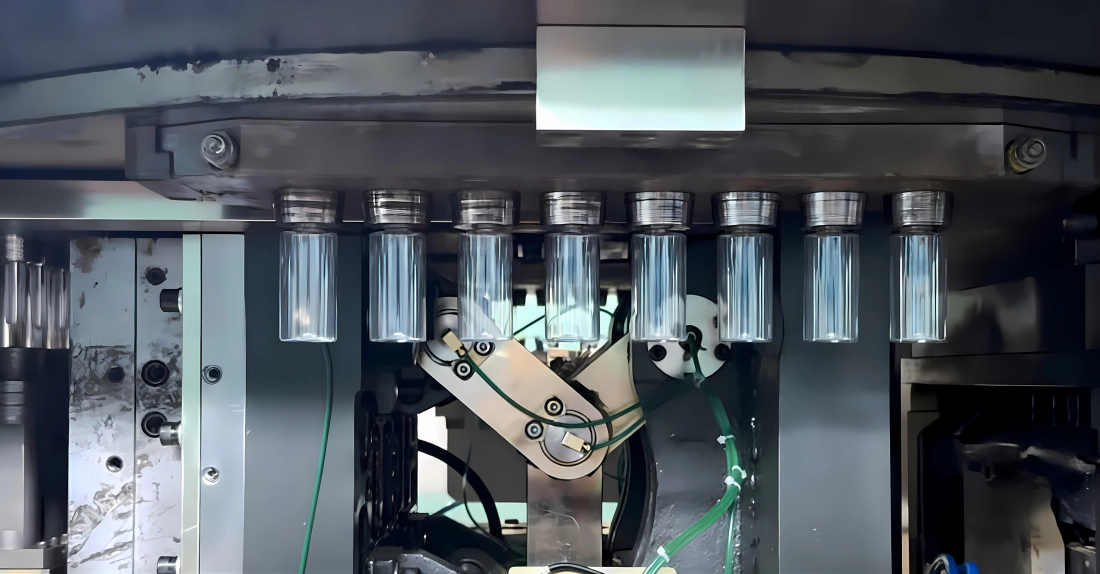
Built in a Dedicated ISBM Production Facility
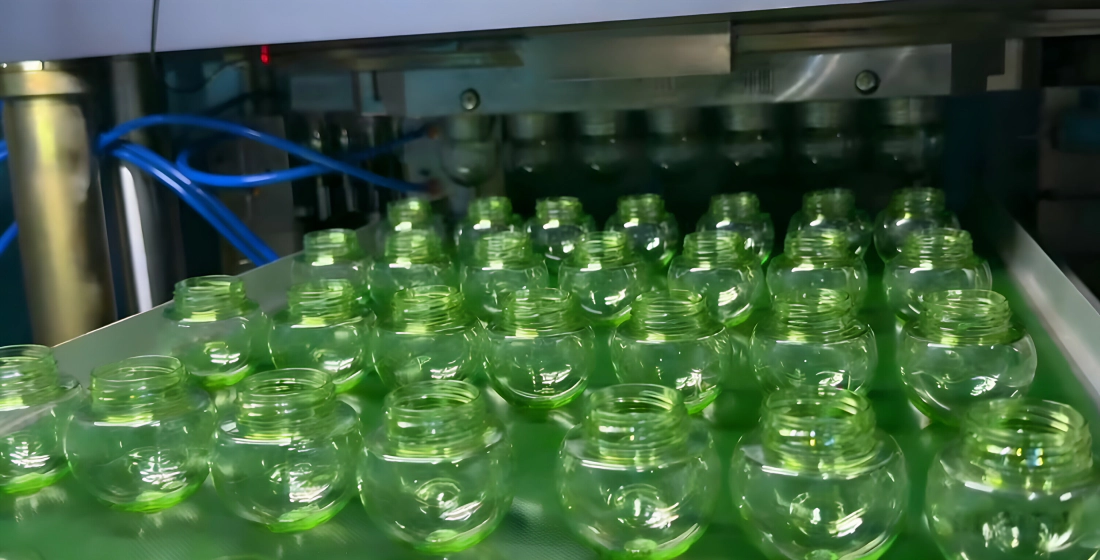
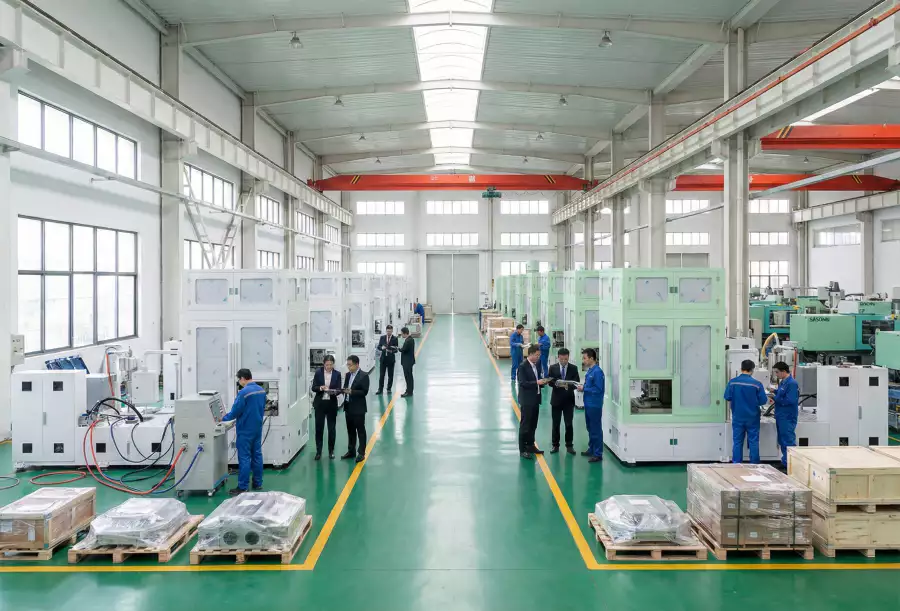
Every EPY and EPYS machine is assembled, tested, and run-verified in our dedicated ISBM manufacturing facility. Key mechanical components are sourced from established industrial suppliers, and each machine undergoes a full production trial using customer-specified resin and container parameters before dispatch.
The facility operates under a structured quality management process covering incoming material inspection, sub-assembly checks, final machine run-off, and pre-shipment documentation. Customers are welcome to arrange factory acceptance tests (FAT) prior to shipping.
- Full machine run-off test before dispatch
- Factory acceptance test (FAT) available on request
- Pre-shipment dimensional and electrical inspection
- Export packaging with sea freight and air freight options
- Installation and commissioning support at destination
4-Station and 3-Station Architecture: What It Means for Your Production
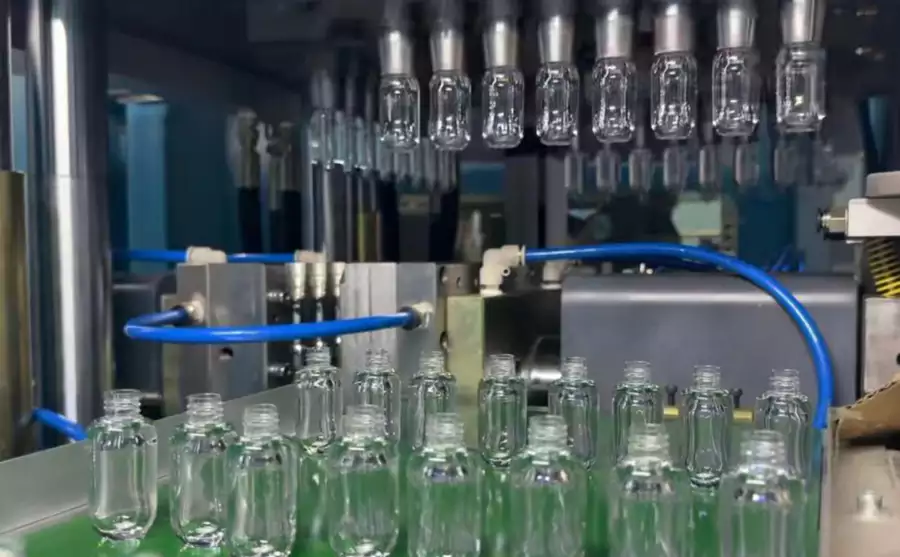
The number of stations in a one-step ISBM machine determines how many operations happen simultaneously per machine cycle. A standard 4-station machine runs injection, temperature conditioning, stretch blow molding, and ejection in parallel, which is the same architecture used by NISSEI ASB-12M, ASB-70DPH, and AOKI AL-350LL-40 machines.
Our 3-station V3 models combine temperature conditioning and ejection into fewer indexed positions, which simplifies the mechanical layout and reduces the machine footprint. This is particularly useful for lines producing simpler container geometries where the full 4-station thermal conditioning benefit is not required.
Both configurations are available across multiple capacity classes in the EPY range, giving you the choice to match your production environment rather than adapt your line to a fixed machine architecture.
Ready to Specify the Right Machine for Your Production Line?
Share your container specifications, current machine model, and production requirements with our technical team. We will verify the closest EPY or EPYS match and provide a detailed proposal including capacity validation, lead time, and commissioning plan.